Frequently Asked Questions Regarding Tooth Replacement Therapy
What Does the Procedure Entail?
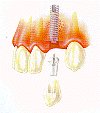 There is a surgical and restorative phase to implant placement. The first phase begins when the implant is placed into the bone. The implant remains covered for three to six months. During this time, the bone attaches to the implant, solidifying the connection to support the new tooth or teeth. In the meantime, the doctor will provide temporary teeth.
After the healing period, the second phase begins. The implant is uncovered and the restorative doctor attaches abutments or posts to the implant. It should be noted that only in rare cases will the patient go without teeth for a significant length of time.
Approximately two to six weeks later, the gum tissue around the posts will have healed, and your doctor will construct and attach your permanent replacement teeth.
We can now offer “teeth in an hour”. In certain cases, we can not only place but also immediately load one or more implants, providing function as well as immediate cosmetic results.
Does it Hurt?
Although discomfort varies from person to person, most patients say it was much less discomfort than they thought it would be. During the surgical procedure, you will be given an anesthetic, so you will feel little or no discomfort. The implanting surgeon uses gentle techniques, and because he or she is working in a clean environment, there is little chance for infection. If you follow all postoperative instructions and take the required antibiotics, there is minimal discomfort. All patients are given pain medications, but many don’t use them.
How Much Does Tooth Replacement Therapy Cost?
There is no denying that Tooth Replacement Therapy is expensive initially. However, remember the benefits of implant supported restorations over traditional forms of dentistry.
Also, the fee is not required all at once. The treatment will not be completed for several months, and we will help you find a financial arrangement that will keep Tooth Replacement Therapy affordable.
Why Does it Cost So Much?
Keep in mind that there are several professionals working to ensure optimum treatment: the implanting surgeon, the restorative dentist, the laboratory technician, and the support staff. These people are all highly skilled and specially trained in Tooth Replacement Therapy, requiring countless hours of education and training. Dental implant procedures also require special equipment that is expensive, and the implants are made of titanium, a costly material. Additionally, the manufacturing and sterile processing of the implants leads to an overall increase in costs. These measures help to assure that you are receiving quality services and products.
Will My Insurance Pay for Tooth Replacement Therapy?
Currently, most dental insurance companies are not paying for Tooth Replacement Therapy. Our front desk personnel are very knowledgeable about how to successfully file both medical and dental insurance claims to help you receive the most benefits your insurance plans offer. When you are ready to start your Tooth Replacement Therapy care, we will gather all the information necessary to process your claims. Even though we will do our best to obtain benefits for you, please remember that the responsibility for payment for your care is ultimately yours.